
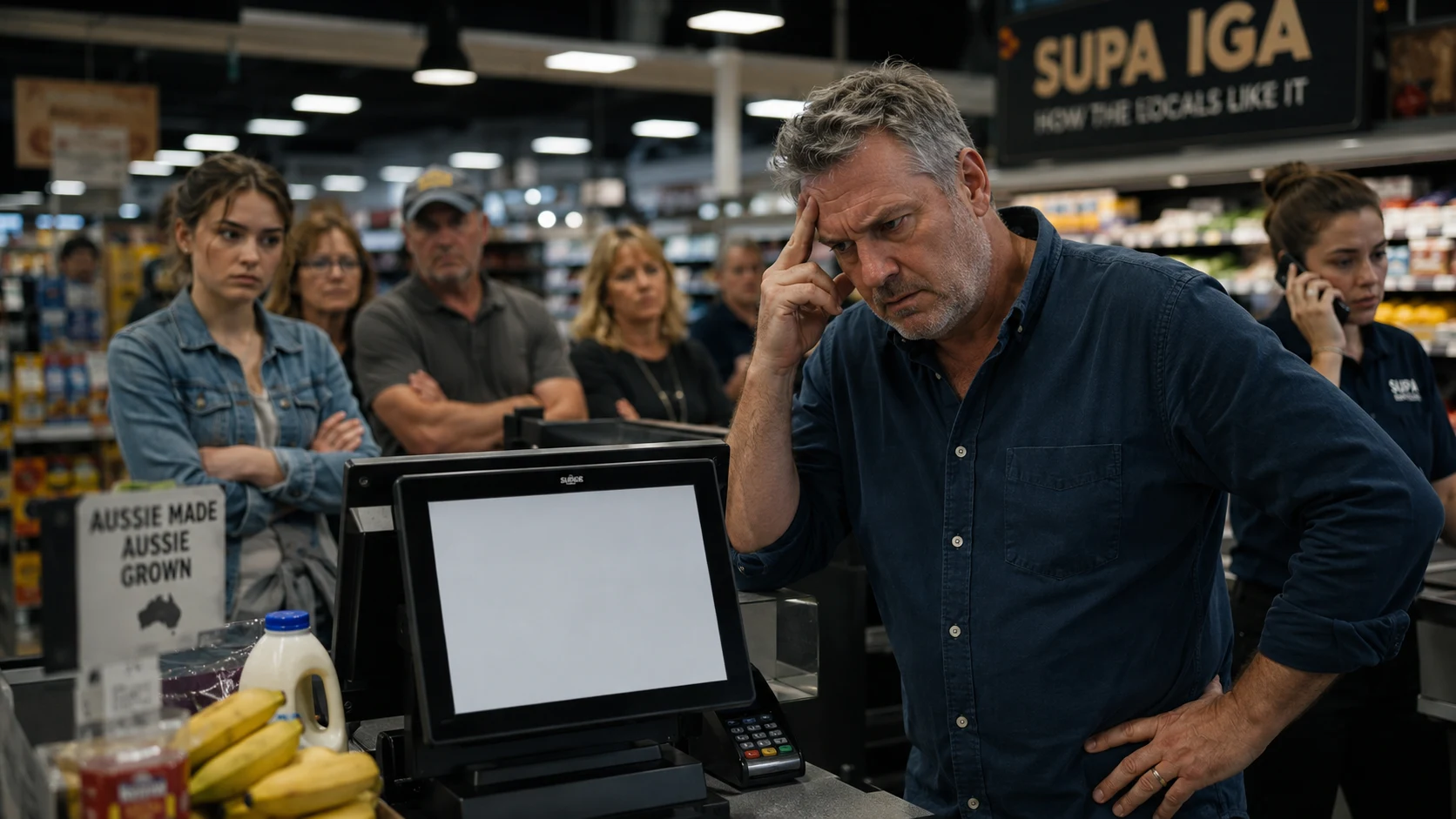
IT downtime in a retail store hits harder than most owners realise until they’re in the middle of it. It isn’t just lost sales at the checkout. It’s inventory that doesn’t update, supplier orders that don’t go through, staff who can’t process a thing, and customers who walk out and don’t come back.
Good it support for small business isn’t about fixing problems after they happen. It’s about preventing them in the first place. The right combination of hardware, software, network design, and proactive monitoring means most retail IT outages never reach your trading floor at all.
Key Takeaways
- IT downtime in retail affects sales, inventory, supplier ordering, and staff productivity simultaneously
- The most common causes are preventable: hardware failure, poor connectivity, and missed security patches
- Proactive managed IT support detects and resolves most issues before they affect trading
- A fully redundant POS system keeps your store processing sales even when your internet connection drops
- Australian retail generates nearly $38 billion in monthly sales (ABS, June 2025) – even brief downtime translates directly to lost revenue
What Does IT Downtime Actually Cost a Retail Store?
Australian retail generates nearly $38 billion in monthly sales, according to the Australian Bureau of Statistics (June 2025). For an independent store turning over $5,000 a day, that works out to roughly $350 in lost sales for every hour your checkout is completely down, and that’s before you factor in staff standing idle, recovery time, and the customers who don’t return.
But sales are only part of the picture. When your POS goes down, your inventory doesn’t update. Supplier orders that run on automated triggers don’t fire. If you’re running a loyalty programme, customer records stop recording. And if the outage touches your network or back-office systems, you might not know the full extent of the damage until hours or days later.
The stores that feel downtime least are the ones that have invested in preventing it – not just recovering from it.
“Most retail IT outages aren’t random bad luck. They follow a predictable pattern: ageing hardware that hasn’t been replaced, a connectivity setup with no fallback, and software patches that have been deferred too long. Prevention is almost always cheaper than the outage.”
The Most Common Causes of Retail IT Outages
| Cause | Typical Impact | Prevention Approach |
|---|---|---|
| Hardware failure | POS terminal down, queue build-up, manual processing | Scheduled replacement cycles, proactive monitoring |
| Internet outage | No connectivity to back-office, payment processing disrupted | Redundant POS system with offline mode, failover connection |
| Cybersecurity incident | System lockout, data loss, prolonged outage | Patched software, endpoint protection, staff awareness training |
| Failed software update | POS or network application crashes post-update | Staged update deployment, rollback capability, IT oversight |
| Power disruption | Abrupt shutdown, data corruption, hardware damage | UPS (uninterruptible power supply) on critical hardware |
Five Ways to Prevent IT Downtime in Your Retail Store
1.) Use a fully redundant POS system
Your POS is the heartbeat of your store. If it relies entirely on an internet connection to function, a single ISP outage shuts down trading. A system like Merlin™ operates locally on your in-store hardware and syncs when connectivity is restored. Your staff keep processing sales, and your data stays accurate, regardless of what the internet is doing.
2.) Schedule proactive hardware maintenance
Ageing hardware is the most predictable cause of retail IT failure. POS terminals, network switches, and receipt printers all have a usable lifespan. Rather than waiting for a component to fail during your busiest trading period, a managed IT provider maintains a hardware replacement schedule that gets ahead of failure before it happens.
3. Build redundancy into your network
A single broadband connection with no backup is a single point of failure. Dual-connection setups, where a 4G or 5G failover activates automatically if your primary connection drops – mean your store stays online through ISP outages and infrastructure disruptions. It’s the network equivalent of a spare tyre.
4. Keep software and security patches current
Missed patches are one of the most common entry points for cybercriminals and a frequent cause of application crashes. A managed IT service ensures updates are tested and deployed on a schedule, not deferred indefinitely because someone is too busy to action them. This applies to your POS software, network firmware, and any back-office applications.
5. Put proactive monitoring in place
Reactive IT support waits for you to call. Proactive monitoring watches your systems around the clock and flags anomalies, a failing disk, abnormal network traffic, or an overloaded server – before they cause an outage. Most issues that reach this stage can be resolved remotely, without any disruption to your trading day.
“The difference between a store that trades through a connectivity failure and one that grinds to a halt comes down to one thing: whether the POS system was designed to operate offline. That’s not a nice-to-have for a grocery or supermarket – it’s a fundamental operational requirement.”
How Managed IT Support Keeps Your Store Running
Most independent retailers don’t have an in-house IT team. When something goes wrong, the process is: notice the problem, search for a contact number, wait on hold, describe the issue to someone who’s never visited the store, and hope for a fast resolution. That model is reactive by design, and it costs you trading time every time it plays out.
- Expertise: Access to IT specialists who understand retail environments, POS systems, and multi-site networking – without the cost of a full-time IT hire.
- Security and steadiness: Endpoint protection, patch management, and incident response built into your monthly service.
- Cost savings: Predictable monthly costs replace unpredictable break-fix bills, and proactive maintenance means fewer emergencies to bill for.
- Productivity: Staff spend less time managing IT workarounds and more time serving customers.
You can read more about the broader benefits in GPK Group’s guide to the benefits of managed IT services for small businesses. For a look at the full service offering, see our IT services overview.
Frequently Asked Questions
The cost depends on your daily turnover and how much of your operation is affected. A store processing $5,000 per day loses roughly $350 in sales per hour of complete checkout downtime – before accounting for staff idle time, recovery costs, and customers who don’t return. Back-office disruptions can add further hidden costs through missed supplier orders and inventory inaccuracies.
Hardware failure and internet connectivity loss are the two most frequent causes of POS downtime in independent retail. Both are highly preventable – hardware through scheduled replacement cycles, and connectivity through redundant network setups with automatic failover. A fully redundant POS system that operates offline eliminates the connectivity risk entirely.
So we provide managed IT retail support that takes care of your entire IT suite for you. From optimising your network to sourcing and rolling out your hardware, and with proactive IT support, we manage it all for you. You focus on running your store, and we take care of the tech.
A managed IT service for retail typically covers proactive system monitoring, hardware maintenance, software updates and patch management, cybersecurity protection, helpdesk support, and strategic IT planning. GPK Group’s managed IT support is delivered entirely by an Australian-based team with specific experience in independent retail and supermarket environments.
Don't Wait for a Breakdown to Think About IT
Every hour of preventable downtime is a cost your competitors aren’t paying. GPK Group offers a free, no-obligation strategy call to assess your current IT setup and identify where your store is most exposed. Contact the GPK team, explore our retail IT solutions, or read our guide to the top 5 managed IT services to understand what a fully managed IT environment looks like for your store.